MYTH
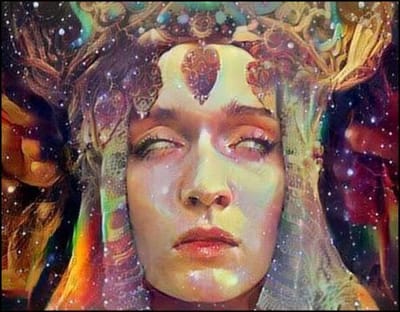
The Primeval World https://ionamiller2020.weebly.com/kybele-attis.html The Primeval World Kybele is 'Mother of the Gods,' 'Mother of the Mountains,' and 'Mistress of Beasts.' The Anatolian Earth Mother embodied the original fluid relationship between the constellation of all beings that gave rise to her voice even before time began. Primal Tradition Goddess, Great Goddess, Kybele, Lady Goddess of the Mountains Visit your small madness upon me, I pray, that the great madness shall pass me by. The Asiatic goddess and her cult-partner arose long before the classical era of belief. She is the Phrygian goddess of magic, wild things, and faith -- the dark mysteries of earth and nature. Phrygians originally worshiped their goddess in an aniconic fashion, like the Thracians who before being influenced by the Greeks never depicted their goddess anthropomorphically. (Bogh, 2007) Generally, she is characterized by a dual nature of unpredictable power and beneficent qualities. We are not proposing a discounted universal goddess theory or matriarchy (Gimbutas 2001). Instead we have to look for evidence derived from an experience of the sacred and artifacts. Arguably, it is a mystery religion, which requires undergoing ordeals, a death-like exerience and suffering. She is usually represented seated on a throne with a phiale (a libation bowl) and a tympanon. She has formidable, awesome, magical powers. People come to her to seek vengeance or justice, and she can possess individuals with madness or illness, or cure them from disease (Borgeaud 1996:27ff.; Roller 1999:156). Roller demonstrates, there is no divine Attis until Hellenistic and Roman times, but this doesn't preclude more archaic antecedents when the goddess was worshiped alone. Other symbols were later transferred to Kybele. The Roman version of the cult differs greatly from the cult in the ancient Phrygian homeland of Kybele. In the Paleo-Phrygian period (9th–7th centuries bc) there was still no influence from the Greeks. The Phrygians were said by Herodotos (VII, 73) to be immigrants from Thrace settling in Anatolia. According to modern theories, this would be in the late Bronze age -- 12th and the 10th centuries bc. The chthonic great goddess had myriad names (Matar, Kubileya, Kubaba) localized at different Mystery sanctuaries. Today's Anatolians are the indigenous population of the region according to scientific studies, and use a Turkish language name for Kybele, which is Sibel. The realities and specifics of prehistoric culture are closed to us. Like it or not we have to rely on ancient evidence to even imagine what she and her controversial cult were actually like. The mythical body is the body in the myth. In Phrygia, no records remain concerning her cult and worship, though there are numerous statues of seated women that archaeologists believe represent Kybele. Often she is also portrayed giving birth, indicative of her Mother Goddess status. The cult was never monolithic, but a power laced with amgibuity. We know the rites were very bizarre, including visionary communion, mystical sympathy with the world, the non-rational dimensions of human experience. This was an oracular cult with no body of doctrine, and no sacred books. It did have mystical psychoactive communion. "Orgia may have been earlier manifestations of cult than the formal mysteries, as suggested by the violently ecstatic rites described in myth as celebrated by Attis in honor of Cybele and reflected in the willing self-castration of her priests the Galli in the historical period. The orgia of both Dionysian worship and the cult of Cybele aim at breaking down barriers between the celebrants and the divinity through a state of mystic exaltation." Giulia Sfameni Gasparro, Soteriology and Mystic Aspects in the Cult of Cybele and Attis (Brill, 1985), p. 53 and 11–19. There is little doubt that the prepared sacred drink was intoxicating and intended to access altered consciousness or mystical communion in a ritual context. It flourished because it provided everyone with the same basic connection to underlying reality. We still feel the impact of the world around us in a series of personal relationships with such genuine radical metaphors. Kybele was worshiped in orgiastic rites, dissonant music, and wild dancing. This kind of bodily mysticism and psychosomatic liberation had only temporary effects each time — the period of the ekstasis (Turcan). But we don't hear how and why of the archaic practices. Our approach tries to penetrate the phenomenon itself, surrounding it from all sides, circumambulating and expanding it by increasing the volume -- amplification. The phenomenon is mythopoetical, not intellectual. But belief in a deity was subsumed in direct experience. Pre-rational experience is somatic -- our physical, animal, biological nature, felt sense experience, and emotions. Beneath the numbness or dissociation of disembodiment, the felt sense has been available as a constant stream of invaluable information. It manifests itself in direct contact which is more than a metaphor -- a vibrant experience.
Read More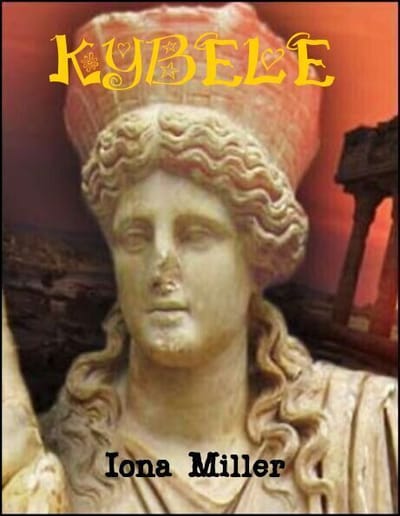
https://5efa4d9bb68ea.site123.me/ I am the Triple Mother of Life, the mistress of all of the elements, the original Being, the Sovereign of Light and Darkness, the Queen of the Dead, to whom no God is not subject. I rule the starry skies. the boisterous green seas, the many--colored earth with all its peoples, the dark subterrene caves. I have names innumerable. In Phrygia I am Cybele; in Phoenicia, Ashtaroth; in Egypt, Isis; in Crete Rhea; in Athens Athena; in the Caucasus 'The Bird-Headed Mother'...Agdistis, Mariamne, Hekate, Hera. --Graves, The Golden Fleece Wild Darkness Kybele gives voices to mute places, a marriage of trees, rocks, and starry sky. Narrative gives a grounded sense of self. The margins are the center of the imagination. Reflecting her own cavernous interiority, she transforms inhospitable, harsh terrains into inviting primordial parks and riverbeds flowing with the imaginal. We yearn to float downstream; reverie moves us forward. Landscape is a provocateur. To see the beauty we must stop, breathe and absorb into the moment, the only reality we all really have. Some cultures create zoomorphic figures and geometric patterns to transform the vast land into a highly symbolic, ritual and social-cultural landscape. She speaks for their unspeakable immensity that reminds us we are truly small. Liminal places connect outside with inside across all experiential domains. Wandering off the path of hypermodernity, we are arrested, trapped in her magically woven web of poetic resonance. There is a synergetic relation between landscape, instinct and imagination that rekindles all as a unified field that is the mycelial root of sacred places of heart and mind. Relationships are the poetry of life and connecting with the land. Kybele is the earth from which we grow, our connection to dreams, the animal realm, our ancestors, and deep unconscious. She is the dust under our feet beyond those areas of origin that can be mapped, giving place a face in the present. What is this invisible ground whose image we carry in our souls where spiritual ideals merge with worldly realities? Isn’t it always right here, right now everywhere always, forever? The contextual background, the invisible environment, is the fundamental ground from which both mind and matter emerge, the luminous absolute space of reality beyond the mere absence of energy/matter. The radiant ground is the fundamental source. Psyche expresses the nature of things, including our own nature. Jung claimed, "every soil has its secret, of which we carry an unconscious image in our souls: a relationship of spirit to body and of body to earth." - CW XVIII Jung said, "The body is the original animal condition, we are all animals in body, and so we have to have an animal psychology in order to be able to live in it. […] Since we have a body it is indispensable that we exist also as an animal.” The animal is the instinctual level of the psyche. Hillman notes, "Our dreams recover what the world forgets. Forgotten pagan polytheism breeds in animal forms. In those animals are the ancient Gods:... The old Gods are still there in our dreams... The animals may go on like Gods, alive and well and unforgotten, in the ikons of our dreams and in the vital obsessions of complexes and symptoms..." The animal within is a guide. Dream animals behave in unusual ways and can even talk as they do in fairy tales. The path, track, or trail of an animal can be followed. They may appear at crucial 'soul junctures,' validating our direction, choices, and path. According to Jungian analyst Dennis L. Merritt: "To be truly human, Jung believed, and to reach our unique potential, we have to be in relationship to animals. This is both an outer relationship to animals and an intimate relationship with the collective unconscious, coming to terms with the animal in our inheritance." We can respond consciously to such animal spirits as we do to land, weather, and seasons of the soul. This bedrock of archaic psyche is the germinal image of images, a generative matrix, personification and inflection of deep universal principles. https://ionamiller2020.weebly.com/cybele.html
Read More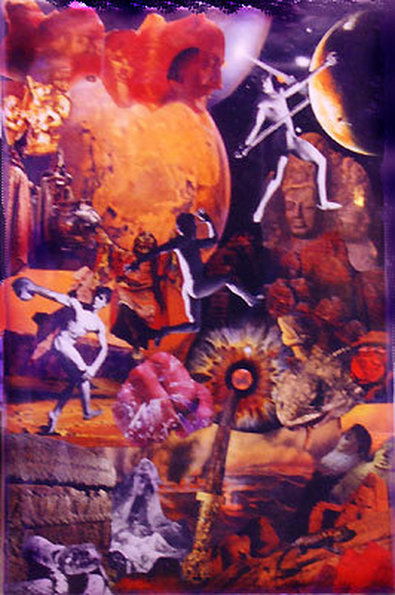
https://ionamiller2017.weebly.com/ares.html We are born into a family which we share with more and more contemporary people as we look further back in time. But when we are gathered to the ancestors are we met by the gods? Shall we move Ares from our archetypal altar to the family shrine? Perhaps some of us can. We know there is power in naming. What is it to name something, to name someone, to name someone an ancestor, or even name a god as direct ancestor? It all comes down to our own name. Genealogy is a heritage-led regeneration. Tracing our lines back from our parents, we move deeper into the realm of the ancestors who gave us the substance of life and soul's self-expression. A sense of soul gives us a sense of history. Our sacred and mythic roots inform our primordial human behavior and the timeless soul-world. They act on us through meaning as well as the world stage. This natural unconscious process doesn't need to be driven by a therapeutic or self-development agenda. In a complex and fragmented world, genealogy helps us revision the present. We look back for a context of meaning using our most personal history of being. We also recognize cultural ancestors, collective ancestors, ancestors of our land, and animal ancestors. We don't carry ancestral DNA from all our direct ancestors. But we remain entangled with them in the ancestral field, consciously, or unconsciously. In real, imaginary, and symbolic ways they are meaningful to our wholeness. We reflect as we find our way back. The inner life exerts its manifest influence. Emotions shape our sense of self and relationships. Ares aggression, might and energy have controlled all of history from behind the scenes. History is written by the competitive winners who then self-describe their glorious descent from the gods, insuring their renown and divine right to rule with genealogical propaganda. It is enforced with constant wars and worldview warfare, a battle for minds. The dragon or serpent guards the treasures of the deep unconscious, the unwritten history of mankind, and its myth-spinning capacity. The serpentine path, which is an image for our descent and return, is a way to find our instinct that has no conflicts, because conflicts belong to the discriminating conscious mind.
Read More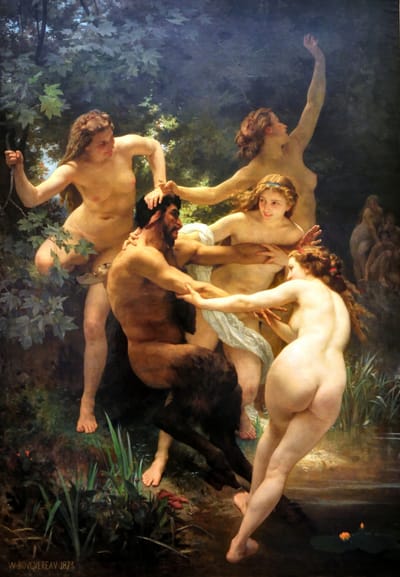
PAN https://ionamiller2020.weebly.com/pan.html When Pan is dead, then nature can be controlled by the will of the new God, man, modeled in the image of Prometheus or Hercules, creating from it and polluting in it without a troubled conscience. (Hercules who cleaned up Pan’s natural world first, clubbing instinct with his willpower, does not stop to clear away the dismembered carcasses left to putrefy after his civilizing creative tasks. He strides on to the next task, and ultimate madness). As the human loses personal connection with personified nature and personified instinct, the image of Pan and the image of the devil merge. Pan never died, say many commentators on Plutarch; he was repressed. Therefore as suggested above, Pan still lives, and not merely in the literary imagination. He lives in the repressed which returns, in the pathologies of instinct which assert themselves, as Roscher indicates, primarily in the nightmare and its associated erotic, demonic, and panic qualities."--Hillman Pan and the Nightmare James Hillman "Panic, especially at night when the citadel darkens and the heroic ego sleeps, is a direst participation mystique in nature, a fundamental, even ontological experience of the world as alive and in dread. Objects become subjects; they move with life while one is oneself paralyzed with fear. When existence is experienced through instinctual levels of fear, aggression, hunger, or sexuality, images take on compelling life of their own. The imaginal is never more vivid than when we are connected with it instinctually. The world alive is of course animism; that this living world is divine and imaged by different gods with attributes and characteristics is polytheistic pantheism. That fear, dread, horror are natural is wisdom. In Whitehead's term "nature alive" means Pan, and panic flings open a door into this reality." --Hillman p.33, Pan and the Nightmare This brilliant book brings Pan back to life by following C. G. Jung's famous saying: "The Gods have become our diseases." Chapters on nightmare panic, on masturbation, rape and nympholepsy, on instinct and synchronicity, and on Pan's female loves-echo, Syrinx, Selene, and the Muses-show the goat-God at work and play in the dark drives and creative passions of our lives. Hillman's insights present the archetypal figure in the depths of nature and archetypal psychology as a method of revelation.Pan and the Nightmare (which includes a full translation of Wilhelm Roscher's masterful 19th-century mythological-pathological treatise on Pan and the demons of the night) is the most radical study of this God ever undertaken. The body of the work is a translation of a monograph by Wilhelm Heinrich Roscher, ‘Ephialtes: A Pathological-Mythological Treatise on the Nightmare in Classical Antiquity’. A co-founder with Nietzsche of the University of Leipzig’s Philology Club, Roscher is lauded by Hillman as a great example of the kind of nineteenth century scholar whose voluminous, wide-ranging knowledge and enthusiasm for the psychological reality of his subject led to flawed but valuable efforts of synthesis and comparison. As Hillman eloquently argues, the “psychological ferment” of the time (Roscher’s monograph appeared in the same year as Freud’s Interpretation of Dreams) means we “may not blame Roscher for the wide casting of his net nor for some of the odd fish he comes up with.” Equally valuable is Hillman’s introductory essay, nearly as long as Roscher’s work, in which he applies his characteristically shrewd, penetrating and original psyche-oriented analysis to Roscher’s subject. Classic psychological concepts such as instinct, the uncanny, synchronicity and repressed sexuality are given fertile new frames via Pan’s irresistible force and the shock of the nightmare experience. THE GREAT GOD PAN IS DEAD. "Plutarch mentions, that in the reign of Tiberius, an extraordinary voice was heard near the Echinades, in the Ionian sea, which exclaimed, that the great Pan was dead. This was readily believed by the Emperor, and the astrologers were consulted; but they were unable to explain the meaning for so supernatural a voice, which probably proceeded from the imposition of one of the courtiers who attempted to terrify Tiberius." Lempriere. "This event occurred, supposedly in the first century A.D., during the reign of Tiberius, in a Roman world in which the rationalistic and evolutionary approach to religion had already done much to bring death not only to Pan but to many of the other greater and lesser Gods of the Greek Pantheon." Robert B. Palmer, in the Introduction, to Dionyus, Myth and Cult, W.F.Otto, p. x. A cry went out through late antiquity: "Great Pan is dead!" Plutarch reported it in his "On the failure of the Oracles, " yet the saying has itself become oracular, meaning many things to many people in many ages. One thing was announced: nature had become deprived of its creative voice. It was no longer an independent living force of generativity. What had had soul lost it: or lost was the psychic connection with nature. With Pan dead, so too was Echo; we could no longer capture consciousness through reflecting within our instincts. They had lost their light and fell easily to asceticism, following sheepishly without instinctual rebellion their new shepherd, Christ, with his new means of management. Nature no longer spoke to us-- or we could no longer hear. The person of Pan the mediator, like an ether who invisibly enveloped all natural things with personal meaning, with brightness, had vanished... When Pan is alive then nature is too, so the owl's hoot is Athena and the mollusk on the shore is Aphrodite... When Pan is dead, then nature can be controlled by the will of the new God, man, modeled in the image of Prometheus or Hercules, creating from it and polluting in it without a troubled conscious... As the human loses personal connection with a personified nature and personified instinct, the image of Pan and the image of the devil merge. Pan never died, say many commentators on Plutarch, he was repressed... Pan still lives... in the repressed which returns, in the psychopathologies of instinct which assert themselves, as Roscher indicates, primarily in the nightmare and its associated erotic, demonic, and panic qualities." James Hillman, A BLUE FIRE: pp.97-98 (originally in "Pan": 24-25,33, 54)
Read More
PSYCHOLOGICAL POLYTHEISM https://ionamiller2020.weebly.com/polytheism.html iMages Soul is rooted in the main ground of the Western tradition, extending from the Greeks through the Renaissance, Romantics, depth psychology and non-interpretive archetypal psychology. Archetypal psychology is a polytheistic, aesthetic, poetic, phenomenological approach. Grounded in myth and archetype, it is about the imaginative life, soul-not-ego, healing; active, reflective introspection; connection with the daemonic; purposeful communication. Knowing oneself is essentially mythic and archetypal, a transition from the material to the psychical point of view. Polytheistic Imagination is Reality; we are deepened and enlivened by tending to soul. Nontheological soul is another dimension grounded in cultivation of imagination and vision. Psyche or Soul is Anima Mundi, Soul of the World; Image is psyche; healing fiction. The Goddess is The Feminine; the Gods are Archetypes, multiple archetypal perspectives; Soul Guide is our Daemon, Angel, or Genius; There is an Ecology of Souls. Narrative fiction is the tool to explore cultural wounding, and ground cultural futuristics as an imaginal methodology, rooted in soul governing the perspectives we have of ourselves in the world (1975). Archetypal psychology is a move away from cure and toward the honoring of symptom, including cultural neurosis. Hillman's archetypal psychology injects the voice of soul from past and present cultural events into future scenarios.
Read More